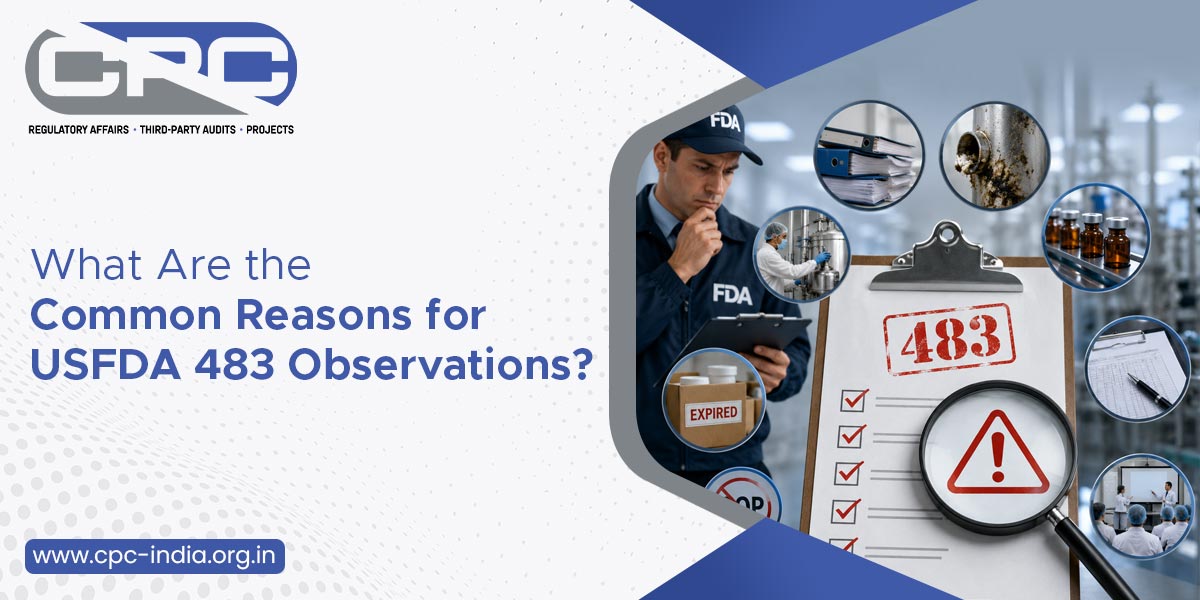
What Are the Common Reasons for USFDA 483 Observations?
When a pharmaceutical or chemical manufacturing site receives a USFDA 483 observation, the pressure feels immediate and personal. Every observation raises questions about compliance, quality systems, documentation, and operational control. In many cases, companies lose valuable time fixing issues that could have been prevented earlier. At CPC India, we have worked closely with manufacturers for more than 25 years, helping businesses prepare for inspections with trusted USFDA consultancy services in India. We understand how difficult inspections can become when systems look strong on paper but fail during real-time review.
Why USFDA 483 Observations Happen?
A USFDA 483 observation is issued when investigators notice conditions that may violate current Good Manufacturing Practices during an inspection. These observations do not always mean a company will face warning letters or import alerts. Still, they signal weak areas that need urgent correction. Many organisations focus heavily on production targets while routine compliance activities slowly weaken over time.
At CPC India, we often see companies struggle because daily operations become disconnected from documented procedures. Teams may follow informal practices that never appear in approved records. During inspections, these gaps become visible very quickly. This is why businesses increasingly depend on a trusted USFDA consulting services provider in India to review systems before regulatory visits happen.
Poor Documentation Practices Remain a Major Concern:
Documentation failures continue to be one of the most common reasons behind USFDA 483 observations. Missing entries, incomplete batch records, overwritten data, and unsigned documents create serious compliance concerns. Even a well-managed production process can face issues if records fail to support activities clearly.
Many companies underestimate how closely investigators examine data integrity. Every correction, change, and approval must remain traceable. At CPC India, we help businesses create practical documentation systems that support daily work without creating confusion for employees.
Common documentation gaps include:
- Incomplete batch manufacturing records
- Missing equipment cleaning logs
- Unverified analytical data
- Incorrect audit trail reviews
- Delayed deviation closures
- Unauthorised document changes
Strong documentation protects both product quality and business reputation. Reliable systems reduce stress during inspections and improve operational discipline across departments.
Weak Quality Management Systems:
A weak quality management system often creates repeated compliance failures across manufacturing sites. Many companies create procedures during audits but fail to maintain them consistently throughout the year. Investigators quickly identify these weaknesses during interviews and facility walkthroughs.
At CPC India, we believe quality systems should support real operational behaviour instead of existing only for regulatory presentation. Effective quality management creates accountability across departments and reduces recurring deviations. Through our USFDA regulatory support services in India, we help businesses strengthen internal review systems, CAPA handling, and quality oversight structures.
Inadequate CAPA Management Creates Repeated Observations:
Corrective and Preventive Action systems play a major role during inspections. When deviations repeat without proper root cause analysis, investigators often conclude that the company has not addressed the actual problem. Weak CAPA systems show poor management control and limited quality ownership.
Many organisations rush to close deviations quickly instead of solving the underlying issue. This approach creates temporary fixes but leads to future observations. At CPC India, we work closely with quality teams to create practical CAPA frameworks that support long-term compliance stability.
Common CAPA-related issues include:
- Weak root cause investigations
- Delayed corrective action implementation
- Missing effectiveness checks
- Repeated manufacturing deviations
- Poor cross-functional communication
These issues affect inspection readiness and reduce confidence in the overall quality system.
Inadequate Training and Employee Awareness:
Even strong procedures fail when employees do not understand them properly. During inspections, investigators often interact directly with machine operators, analysts, warehouse staff, and supervisors. Inconsistent answers create concerns about training effectiveness and procedural understanding.
At CPC India, we regularly notice that companies conduct training sessions only to satisfy compliance records. Real understanding remains limited because employees rarely receive practical guidance connected to daily responsibilities. Effective training should build confidence, clarity, and accountability across all operational levels.
As experienced USFDA Compliance Consultants in India, we help companies design role-based training systems that improve employee preparedness during inspections and routine operations.
Data Integrity Issues Continue to Rise:
Data integrity remains one of the most serious concerns during USFDA inspections today. Investigators closely evaluate electronic systems, audit trails, access controls, and laboratory records. Even small inconsistencies can trigger larger concerns regarding product reliability and compliance culture.
Many businesses still depend on outdated practices that increase the risk of accidental errors or unauthorised changes. At CPC India, we support organisations in building transparent systems that protect data reliability while improving operational efficiency through our USFDA consultancy services in India.
Frequent data integrity concerns include:
- Shared login credentials
- Missing audit trail reviews
- Uncontrolled spreadsheet usage
- Backdated entries
- Deleted analytical records
- Unsecured electronic systems
A strong data governance structure improves inspection confidence and supports long-term regulatory trust.
Equipment and Facility-Related Deficiencies:
Facility conditions often reveal the true compliance culture inside a manufacturing site. Poor maintenance, damaged surfaces, improper material flow, and inadequate environmental controls immediately attract the investigator’s attention. These observations usually indicate larger system weaknesses behind the scenes.
At CPC India, we guide companies in improving facility compliance through practical engineering, quality, and operational reviews. As a trusted USFDA consulting services provider in India, we understand that infrastructure compliance requires constant monitoring, not last-minute preparation before inspections.
Many organisations delay preventive maintenance due to production pressure. Over time, this creates operational risks that affect product quality and regulatory confidence. Strong maintenance systems reduce breakdowns, contamination risks, and process disruptions.
Laboratory Control Weaknesses During Inspections:
Laboratory systems receive intense scrutiny during USFDA inspections because analytical results directly impact product release decisions. Inadequate method validation, poor sample handling, and incomplete investigations often result in serious observations.
At CPC India, we help laboratories improve procedural discipline while strengthening analytical review systems. Through our USFDA regulatory support services in India, we support businesses in maintaining accurate, traceable, and inspection-ready laboratory operations.
Common laboratory concerns include:
- Incomplete out-of-specification investigations
- Poor instrument calibration records
- Unverified test methods
- Improper sample storage conditions
- Missing analyst qualification records
Laboratory compliance directly affects product credibility. Reliable systems protect both patient safety and market reputation.
Why Early Compliance Preparation Matters?
Many companies begin preparing only after receiving notice of an upcoming inspection. This reactive approach creates unnecessary pressure and often exposes deeper operational weaknesses. Real inspection readiness comes from building strong systems every day, not during emergency preparation periods.
At CPC India, we help businesses move from reactive compliance to preventive compliance planning. Our experience across the pharmaceutical and chemical industries allows us to identify hidden risks before they become regulatory observations. As experienced USFDA Compliance Consultants in India, we focus on practical solutions that strengthen operations without disrupting productivity.
When businesses improve compliance culture early, they often experience:
- Better production consistency
- Reduced batch failures
- Stronger employee accountability
- Faster deviation closure
- Improved customer confidence
- Smoother regulatory inspections
These improvements support both business growth and long-term operational stability.
How CPC India Supports Inspection Readiness?
Regulatory inspections test more than documents and procedures. They evaluate discipline, transparency, communication, and operational control across the organisation. At CPC India, we understand the emotional pressure companies face during these inspections because we have supported manufacturers since 2002 across quality, regulatory, and project consulting.
Our team works closely with organisations to simplify complex compliance expectations into practical daily systems. Through our USFDA consultancy services in India, we help businesses identify weaknesses early, improve process control, and strengthen inspection confidence. Our approach remains practical, collaborative, and focused on sustainable improvement rather than temporary corrections.
Whether companies require gap assessments, mock audits, CAPA improvement, documentation support, or training systems, CPC India provides structured guidance that supports long-term compliance readiness. As a reliable USFDA consulting services provider in India, we stay committed to helping businesses build trust, maintain quality, and face inspections with confidence.
Final Thoughts:
USFDA 483 observations rarely happen because of one isolated mistake. Most observations develop slowly through weak oversight, inconsistent practices, and delayed corrective actions. Businesses that focus on preventive compliance build stronger operations, safer products, and greater regulatory confidence over time.
At CPC India, we believe every inspection challenge can become an opportunity to improve systems and strengthen organisational discipline. Through our trusted USFDA regulatory support services in India and guidance as experienced USFDA Compliance Consultants in India, we help pharmaceutical and chemical companies prepare for inspections with clarity and confidence.
If your organisation wants to strengthen compliance systems before the next inspection, connect with CPC India today. Let us help you build practical solutions that protect quality, improve operational control, and support long-term regulatory success.