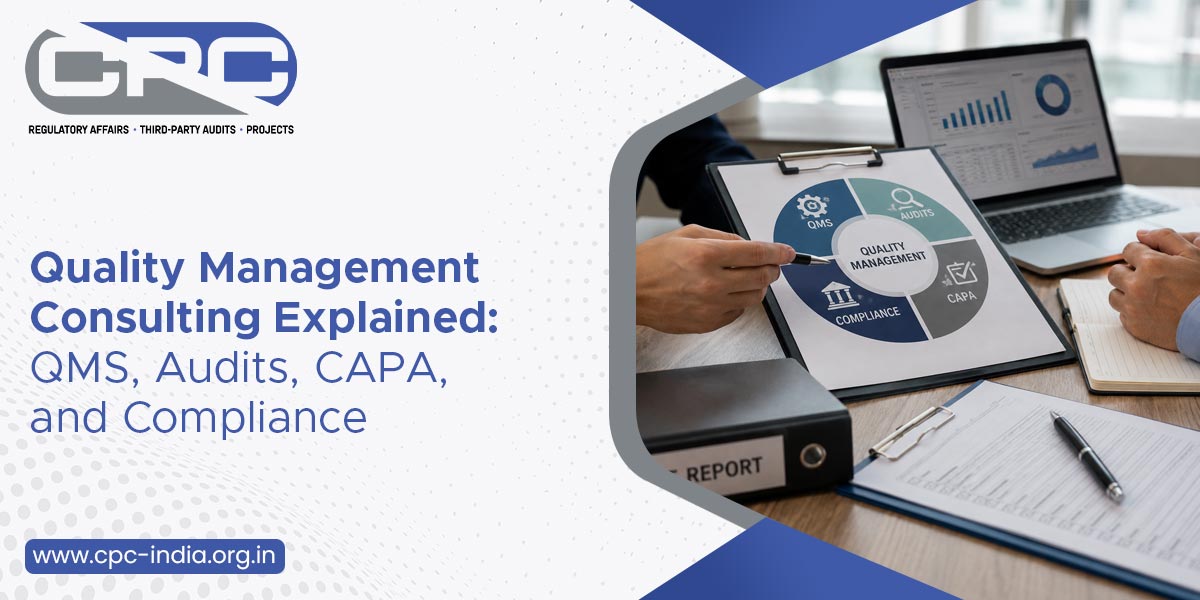
Quality Management Consulting Explained: QMS, Audits, CAPA, and Compliance
A quality issue rarely begins with a major failure. It may start with one missed record or unclear step. At first, it doesn’t seem important. Then an audit draws near, and small gaps begin appearing everywhere. Through Quality management consulting services in India, we help bring order back without placing more strain on your team.
At CPC India, we’ve seen how such gaps can affect confidence. Your staff may work hard, yet still worry about missing a key detail. That pressure often grows when roles, records, and review steps aren’t clear. Good quality work should reduce that fear, not add to it.
Quality Management Is About More Than Documents:
Many people tell us that the QMS looks fine on paper. Yet daily work tells a different story. Forms may exist, but staff may not know which version to use. Records may be complete, but the facts may not match the actual process.
With Quality management solutions in India, we look at what happens on the working floor. We compare written steps with real tasks, roles, records, risks, and approval routes. This helps us spot gaps that a document-only review can miss.
A useful QMS should guide each task without slowing the work. It should make ownership clear and keep records easy to find. It should also help managers notice risks before a batch, project, or audit is affected.
What a Practical QMS Should Cover:
While each site has different needs, most systems should clearly manage:
- Quality policy, goals, and assigned roles
- Standard operating procedures and work instructions
- Document creation, approval, issue, and revision
- Staff training and proof of skill
- Supplier checks and material controls
- Deviations, complaints, changes, and CAPA
- Internal audits and management reviews
- Risk checks and ongoing improvement
Through Quality management advisory in India, we help connect these parts into one working system. The aim isn’t to create more forms. We want each record to serve a clear purpose and support a sound decision.
Why QMS Problems Often Stay Hidden:
It usually starts with something small. A task changes, but the procedure stays the same. A new team member learns from a colleague instead of an approved guide. Soon, the written process and actual practice begin moving in different directions.
Our work in Quality management system consulting in India often begins by listening. We speak with staff who perform the tasks each day. We review how records move, where delays happen, and which steps cause doubt.
CPC India helps bring these details into one clear view. We’ve spent more than 25 years working with pharmaceutical and chemical firms. Founded in 2002, we support quality, regulatory, and project needs with care and practical judgement.
Audits Should Reveal Truth, Not Create Fear:
The word “audit” can make even skilled staff feel tense. People may worry about being blamed for old gaps. We understand that feeling. An audit works best when everyone sees it as a chance to learn.
Through Quality management consulting services in India, we review the process without hunting for fault. We look for facts, patterns, risks, and weak controls. This gives your team a fair view of what needs attention.
Common Areas Reviewed During an Audit:
An audit may cover:
- Approved procedures and current document versions
- Staff training records and skill checks
- Equipment use, cleaning, upkeep, and calibration
- Material receipt, storage, issue, and traceability
- Batch records, logbooks, and lab records
- Deviations, complaints, recalls, and change controls
- CAPA records and proof of effectiveness
- Data handling, access, review, and retention
Our Quality management solutions in India help turn audit findings into clear tasks. Each gap receives an owner, due date, risk level, and review step. This keeps the response focused and easier to track.
CPC India also helps teams prepare for client, internal, and regulatory audits. We review likely risk areas, check key records, and discuss possible questions. This preparation helps staff answer with facts instead of fear.
CAPA Is More Than Closing an Observation:
A CAPA may look complete because every field has an entry. Yet the same issue can return weeks later. Maybe the true cause wasn’t found. Maybe the action fixed the result but left the cause untouched.
With Quality management advisory in India, we slow down at the right point. We ask what happened, when it began, and which control failed. We also check whether similar risks exist in another process.
A Sound CAPA Process Usually Includes:
A clear CAPA process should include:
- A plain and factual problem statement
- Immediate control to limit risk
- A review of scope and possible impact
- Root cause analysis based on evidence
- Corrective action linked to the true cause
- Preventive steps for related risks
- Named owners and realistic due dates
- An effectiveness check after completion
Through Quality management system consulting in India, we help make each CAPA easier to follow. We avoid vague actions such as “staff counselled” when stronger process controls are needed. Training can help, but training alone may not stop the issue.
At CPC India, we often see teams rush to close CAPA records before an audit. A quick closure may feel safe, but weak proof creates more questions. We help build actions that stand up during review and remain useful afterwards.
Compliance Must Work Every Day:
Compliance can’t be treated as an event that begins before an inspection. It lives in everyday choices. It appears when a record is entered on time, a change is reviewed, or an unusual result is reported.
Our Quality management consulting services in India support daily control, not short-term preparation. We help align written processes with real work. This makes it easier to maintain records and explain decisions during an audit.
Rules can change, and business needs can shift. Your system must handle both without confusion. A controlled change process helps assess risk, update documents, train staff, and confirm that the change works as planned.
Using Quality management solutions in India, we help review such changes from start to finish. We check the reason, affected areas, possible risks, required proof, and final approval. This helps prevent missed steps after a change goes live.
Building Trust Inside the Team:
Many quality problems grow when staff feel unsafe raising concerns. A missed entry may be hidden. A small error may remain unreported. Over time, silence can create more risk than the first mistake.
Through Quality management advisory in India, we encourage open reporting and fair review. A strong system should help people speak early. Early action gives us more time to understand the cause and limit the impact.
CPC India works with managers and staff to make quality part of normal work. We help define roles, review training needs, and set clear points for action. This builds trust because everyone knows what happens next.
Management Review Should Lead to Decisions:
A management review shouldn’t become a meeting filled with old charts. It should help leaders see what needs care now. Useful reviews connect data with risk, cost, delay, product quality, and patient or customer safety.
Our Quality management system consulting in India can help shape a focused review process. We may examine audit trends, repeat deviations, CAPA delays, complaints, supplier issues, and training gaps. Each discussion should end with clear ownership.
Signs That Your QMS Needs Attention:
You may need support when:
- The same audit findings keep returning
- CAPA records stay open for long periods
- Procedures don’t match current work
- Staff use different ways to complete one task
- Training records don’t show real skill
- Changes begin before risk checks are complete
- Managers struggle to find reliable quality data
- Audit preparation depends on urgent last-minute work
CPC India approaches these signs with care. We know each gap carries a story, and each team faces real pressure. Our role is to make the next step clear and manageable.
Choosing Support That Fits Your Site:
You don’t need advice that ignores your daily limits. You need a plan that respects your staff, workload, products, and risk level. Good support should leave your team stronger, not dependent.
With Quality management consulting services in India, we begin by understanding your present system. We then agree on priorities, time frames, owners, and proof. This keeps the work practical and avoids needless changes.
Our Quality management solutions in India may support QMS design, gap checks, audit readiness, CAPA review, and document control. The scope can match one urgent concern or a wider quality plan.
Through Quality management advisory in India, we also help leaders make sound choices when the answer isn’t obvious. We explain risk in plain words and show how each option may affect compliance and work.
Our Quality management system consulting in India focuses on systems that people can use with confidence. We want your documents, controls, and records to reflect the work taking place each day.
A Clearer Way Forward:
Maybe your team has lived with the same quality concerns for months. Perhaps every audit brings back the same worry. We’ve seen this happen often, and it can improve with honest review and steady action.
CPC India brings more than 25 years of hands-on insight to each assignment. We listen first, find the real gaps, and help build controls that last. The goal is simple: fewer surprises, clearer work, and stronger trust in your quality system.